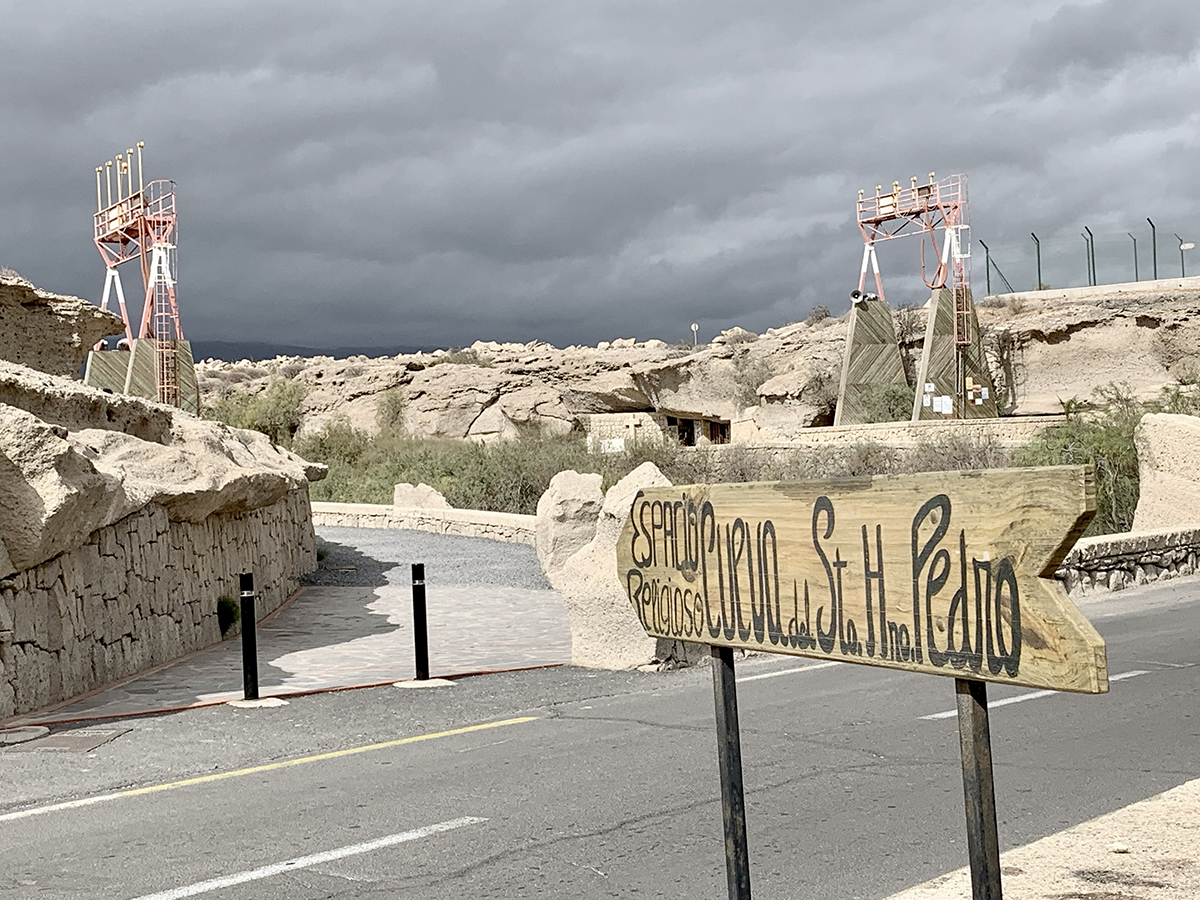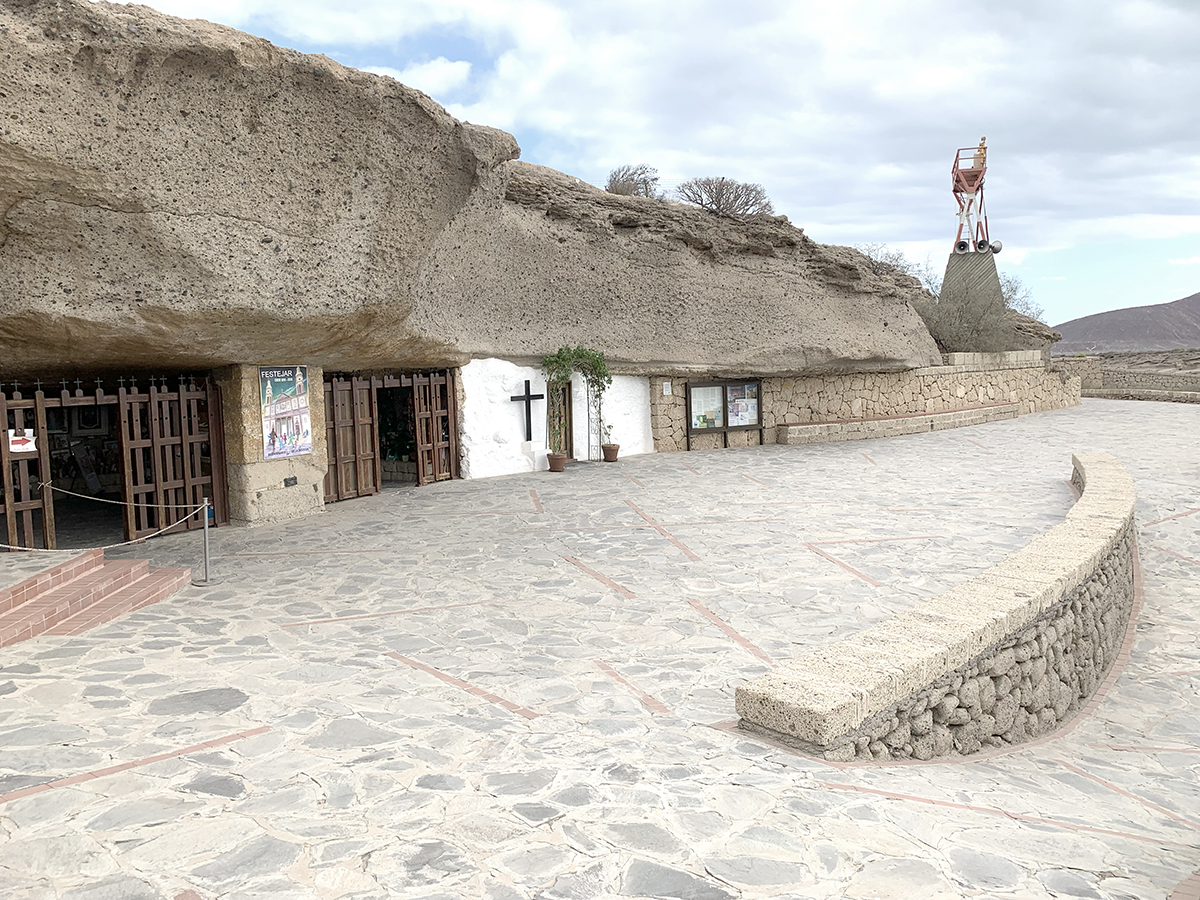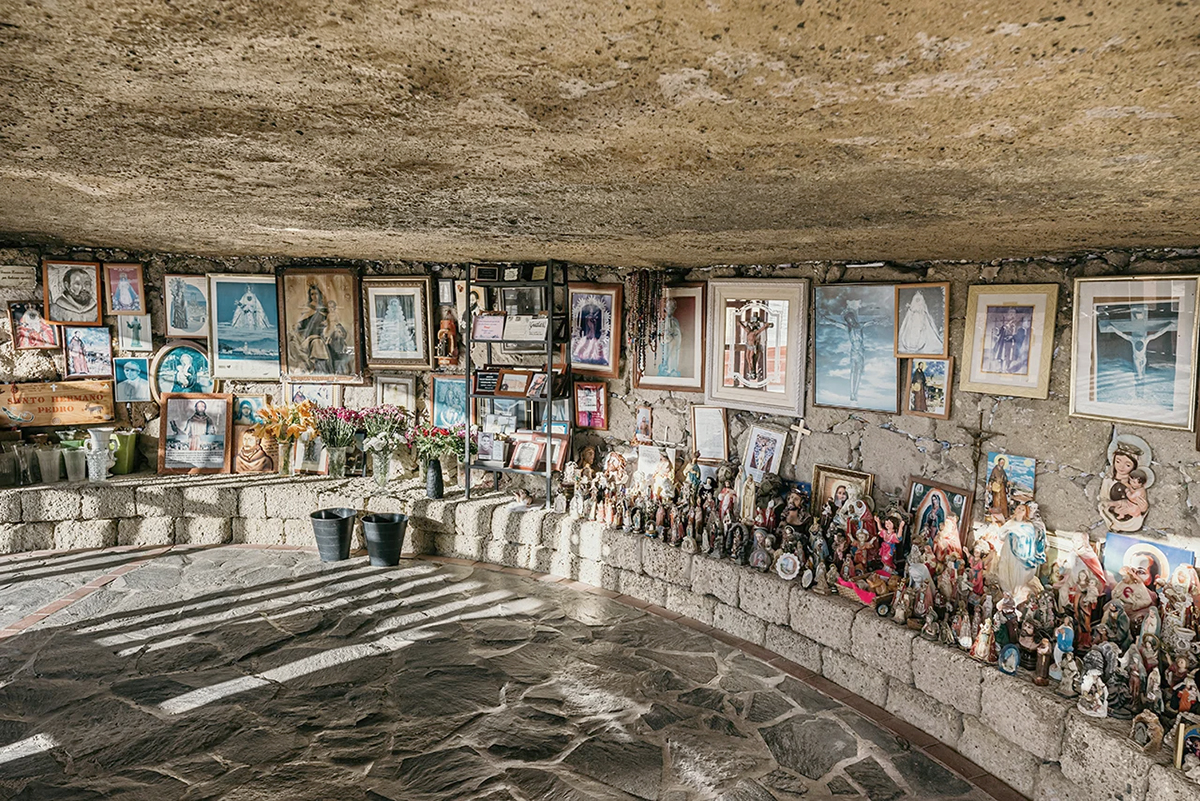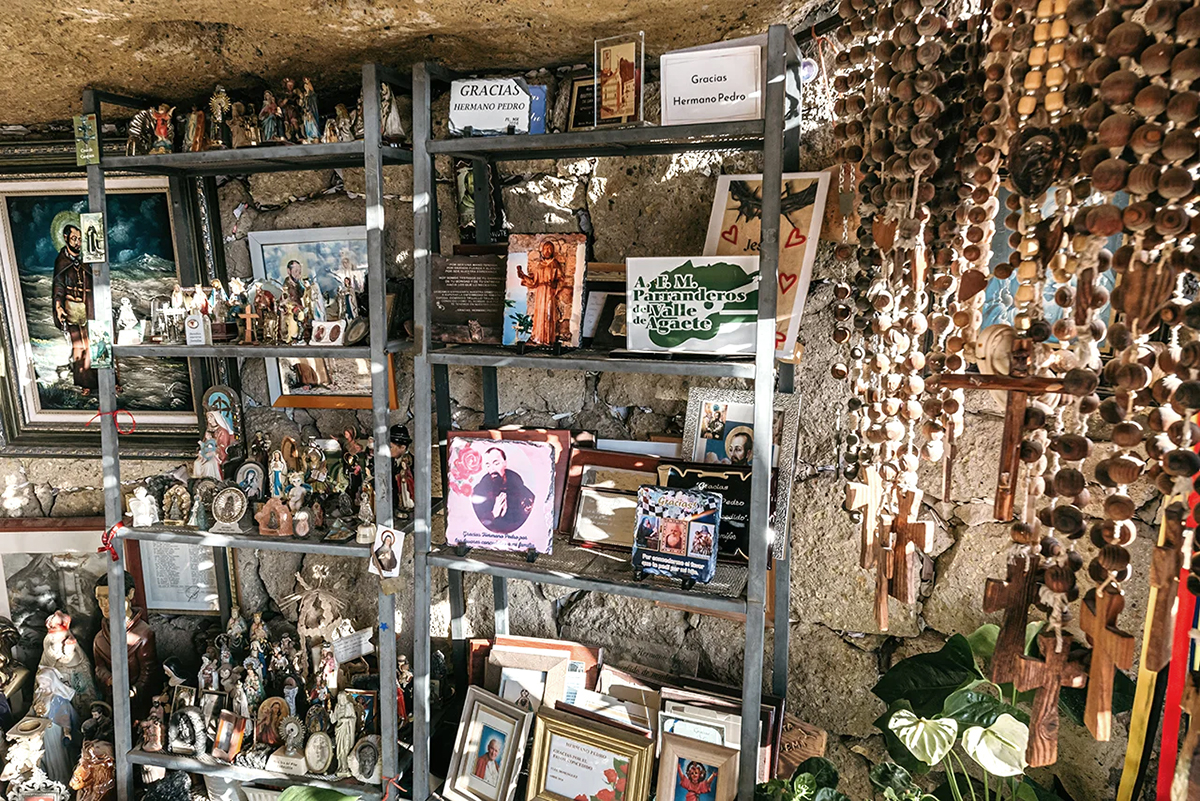
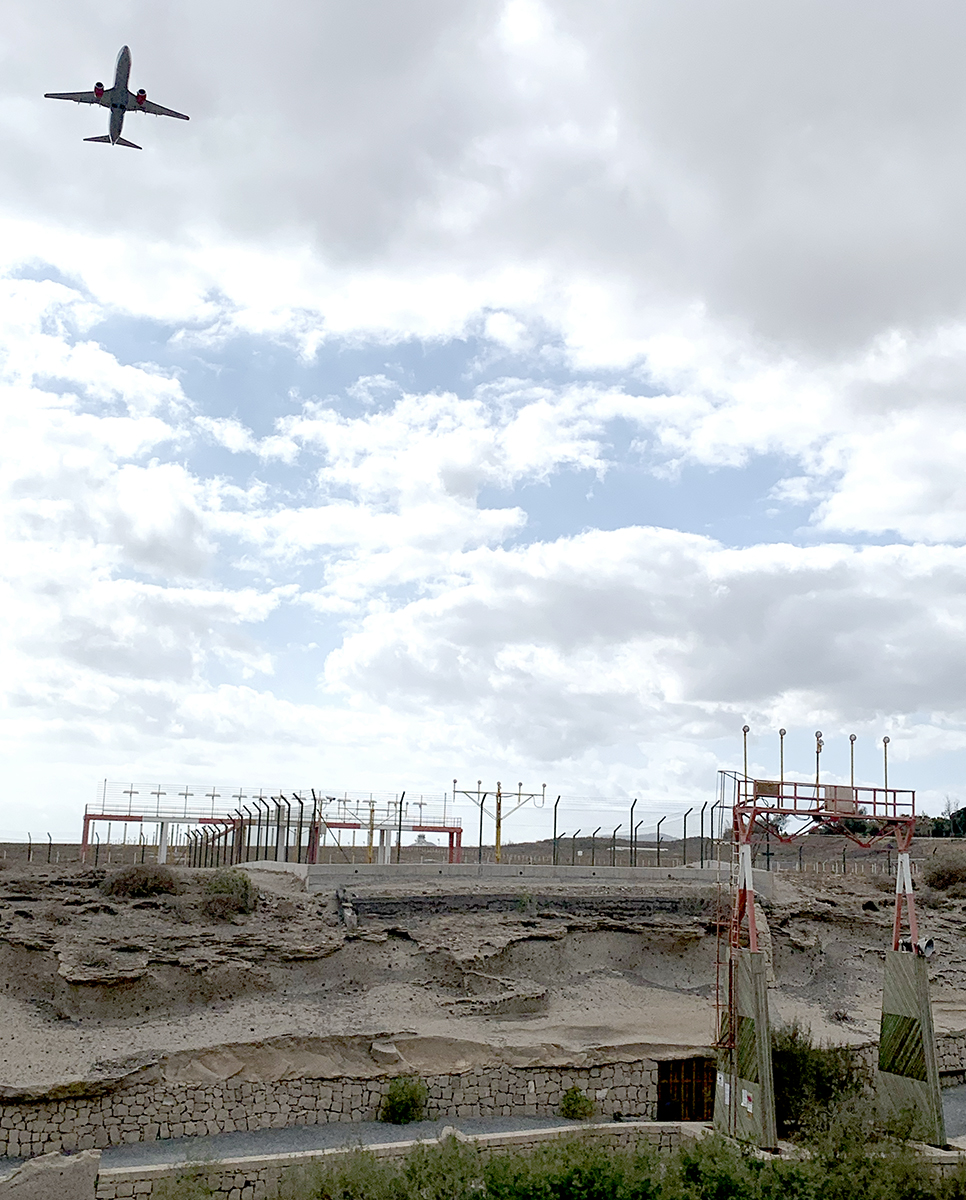
Tenerife has many sacred sites, but none as unusual as the Cave of Hermano Pedro. Just off the TF-1 highway, near the island’s southern airport, a small shrine sits beneath the roar of jet engines. The ochre cliffs, carved by wind and time, frame a scene both spiritual and surreal.
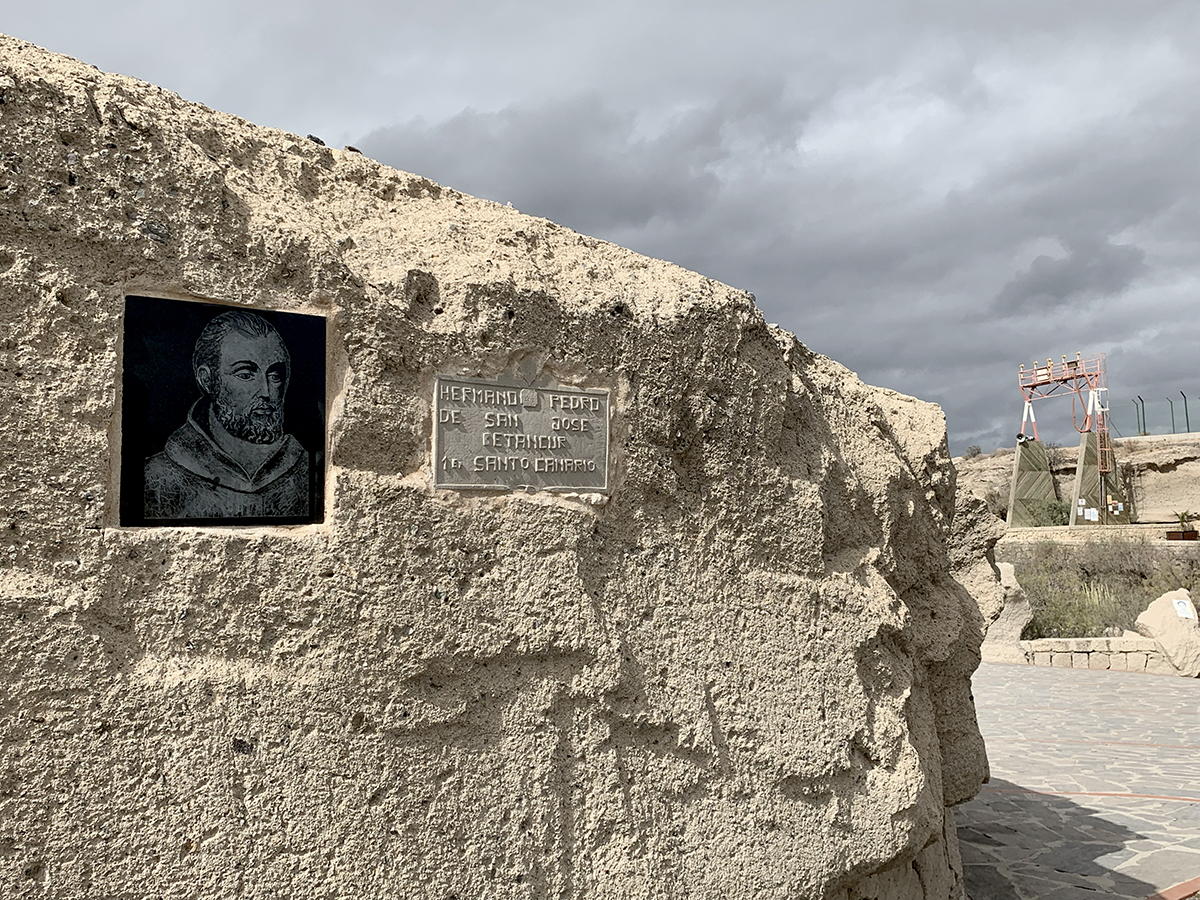
The cave marks the humble beginnings of Pedro de Betancur, born in 1626 in the mountain village of Vilaflor. Born to a noble but impoverished family, Pedro worked as a shepherd along the dry coast near El Médano, often sleeping or praying in this same cave. In his twenties he left for Guatemala, where he devoted his life to caring for the poor and the sick. He founded the Order of Our Lady of Bethlehem, and after his death in 1667, he was canonized as Guatemala’s first saint — and the only one from the Canary Islands.
Today, around 300,000 pilgrims visit his cave each year. In September, a nighttime procession winds from Vilaflor to the site — a journey of faith that ends almost beneath the airport’s runway lights.
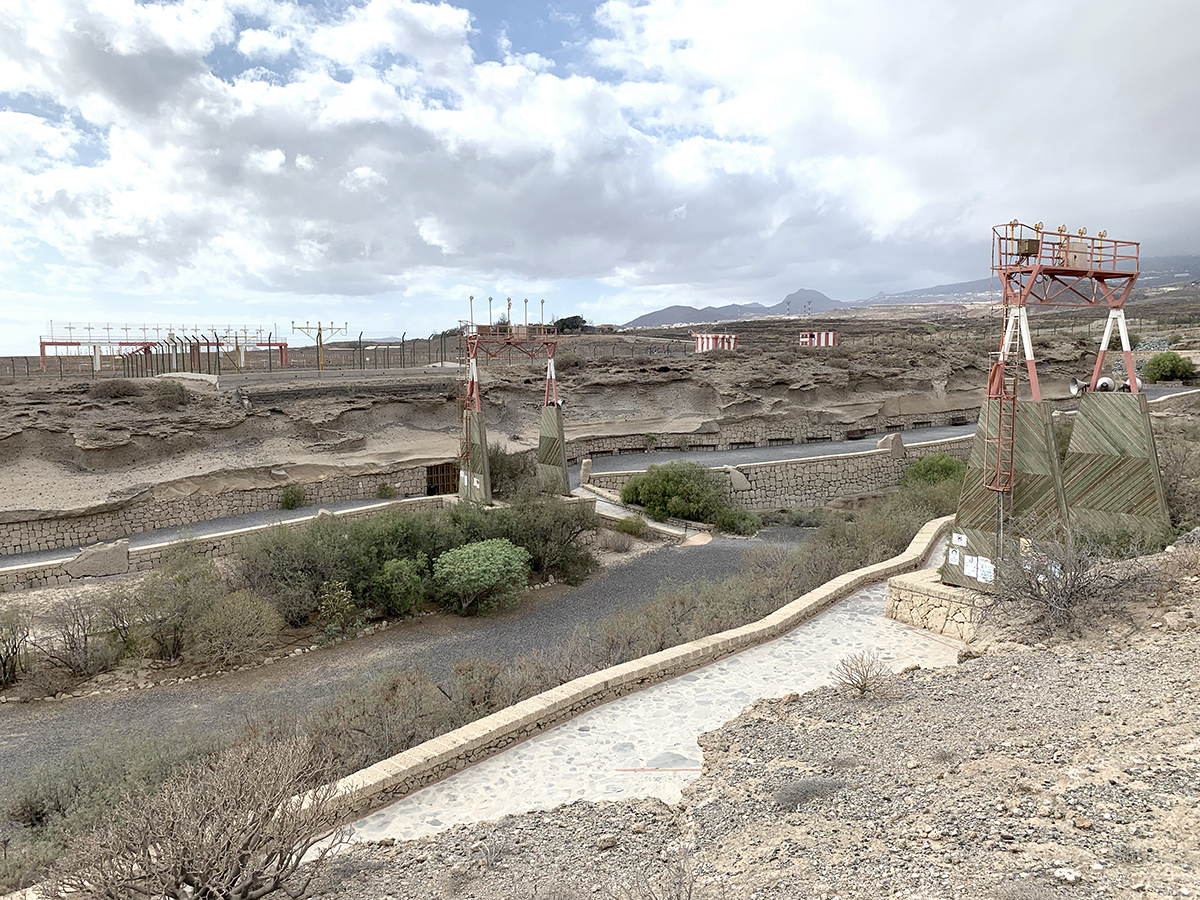
That proximity is no coincidence. When Tenerife South Airport was built in the 1970s under Franco’s regime, the sacred site stood directly in the path of progress. Bulldozers could flatten farms, but not a holy shrine. A delicate compromise was struck: the airport was built — and Hermano Pedro’s grotto was spared.
The result is a landscape both chaotic and poetic. The surrounding barranco, carved from soft volcanic rock, is now home to European “van-lifers” and surfers living in makeshift shelters of pallets and plastic. Between them, pilgrims still descend the steps to the cave, passing the airport’s red-and-white approach lights that loom like modern totems.
If Hermano Pedro were to look out from his cave today, he would see jets skimming past — twenty meters above his head — before disappearing toward Latin America, the land he once reached after months at sea.
A saint’s solitude now sits beneath the flight path of the modern world.