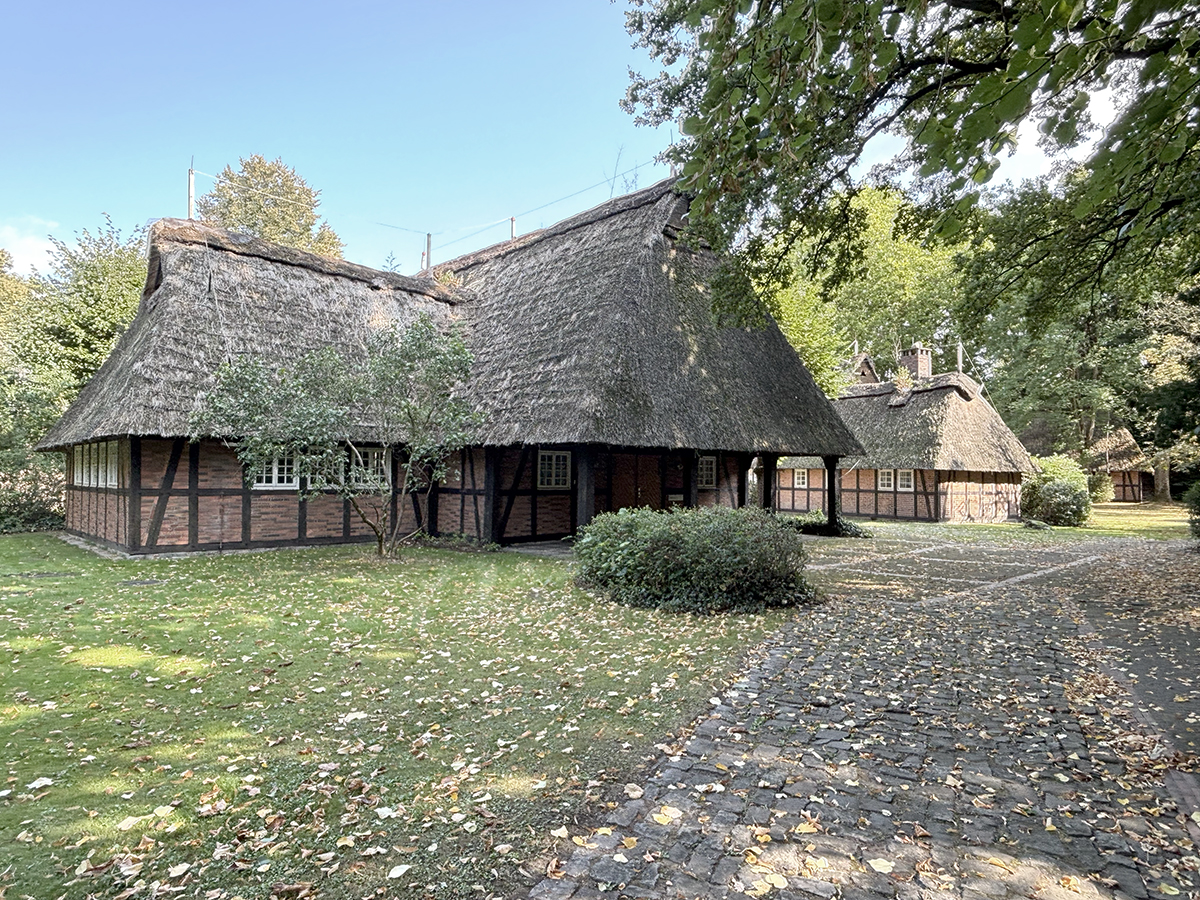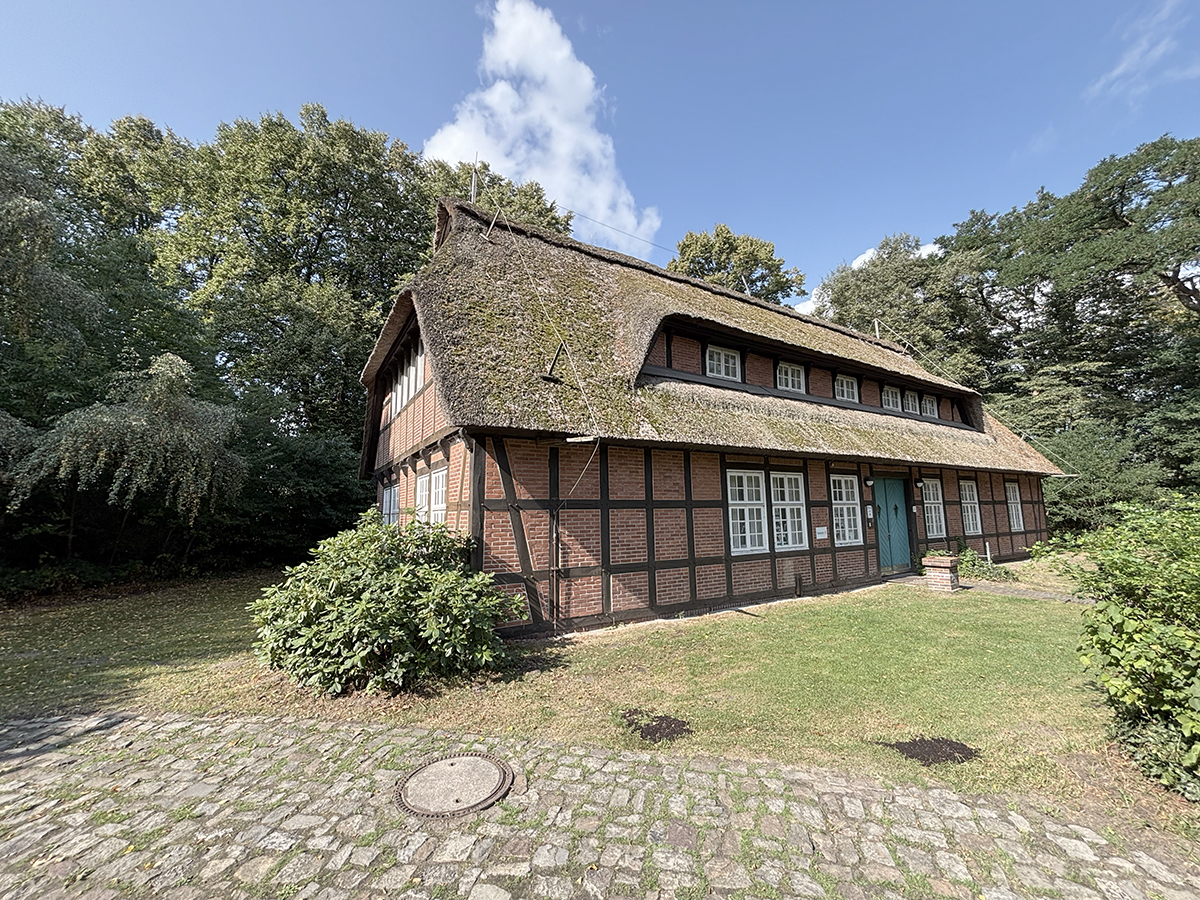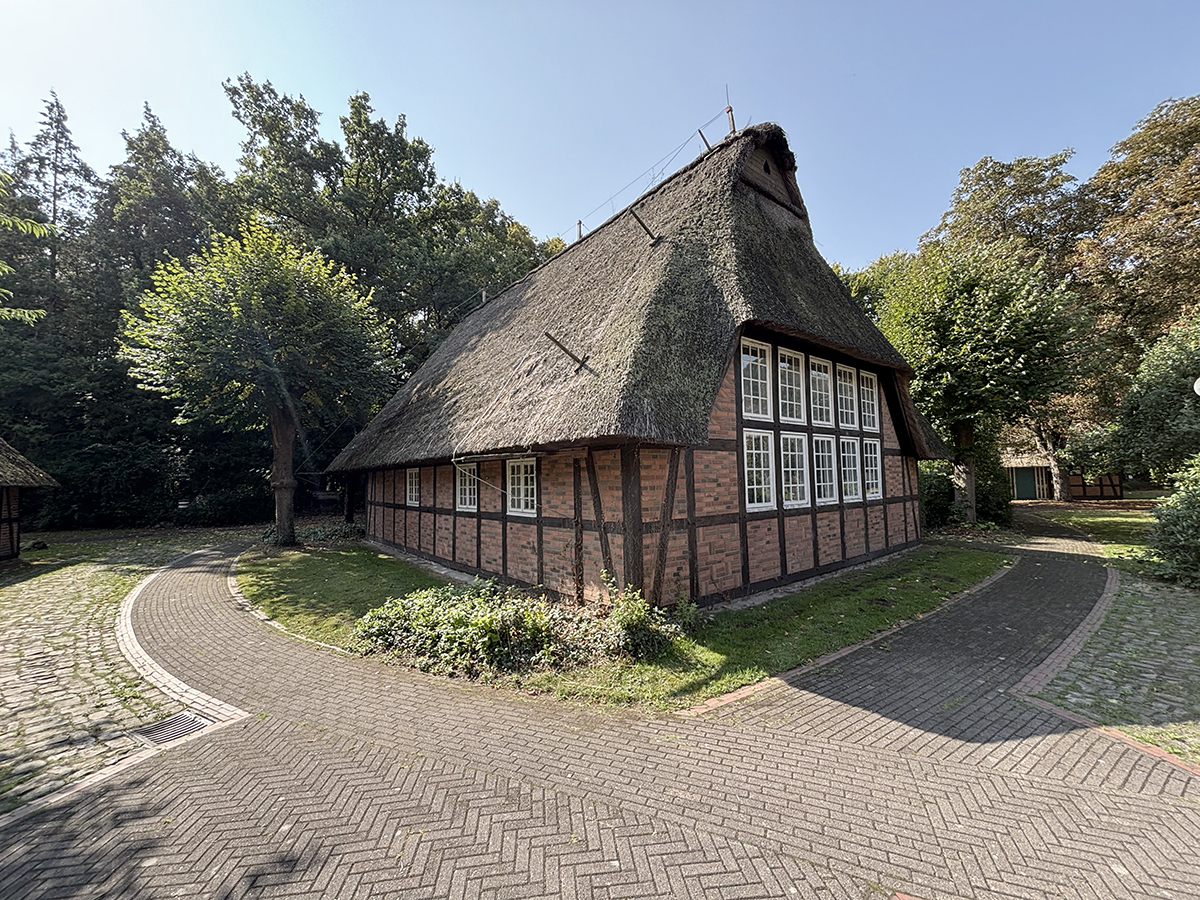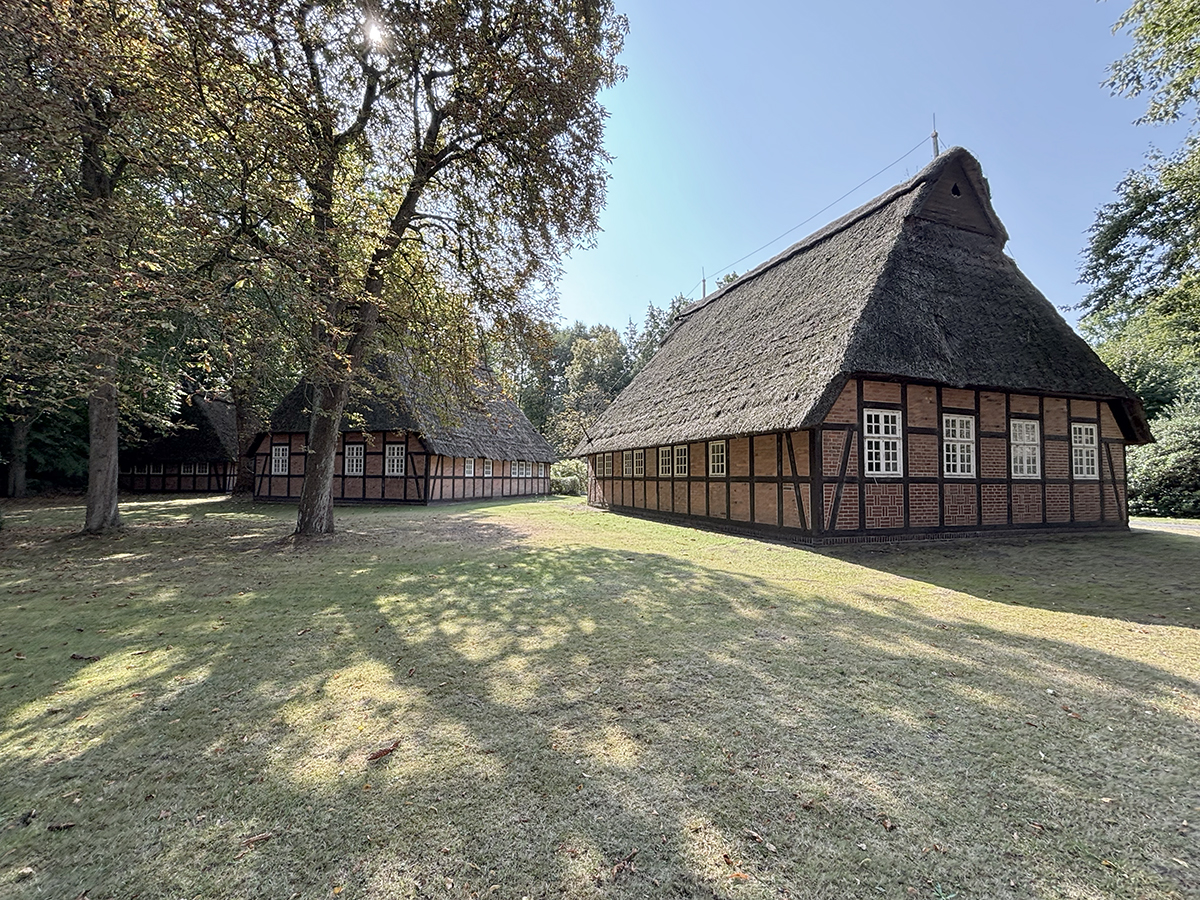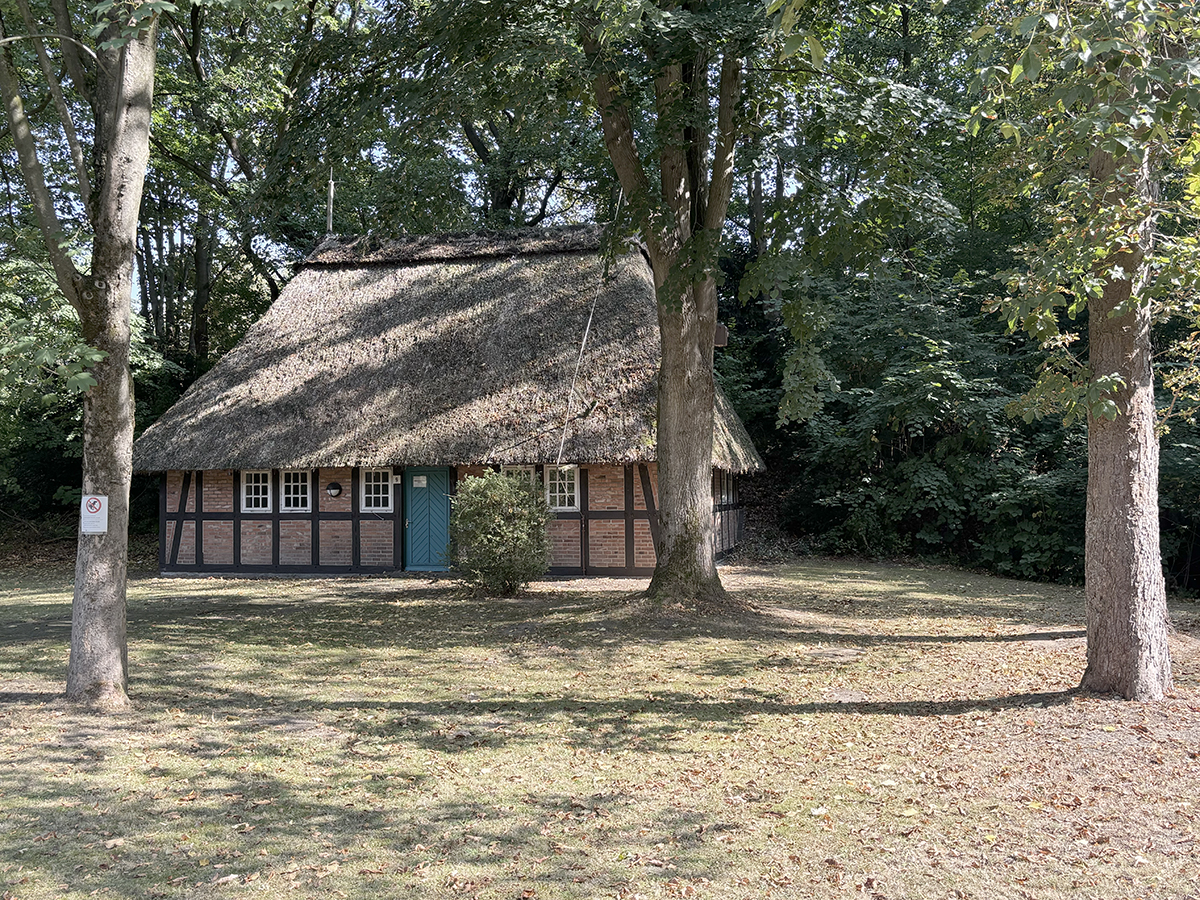
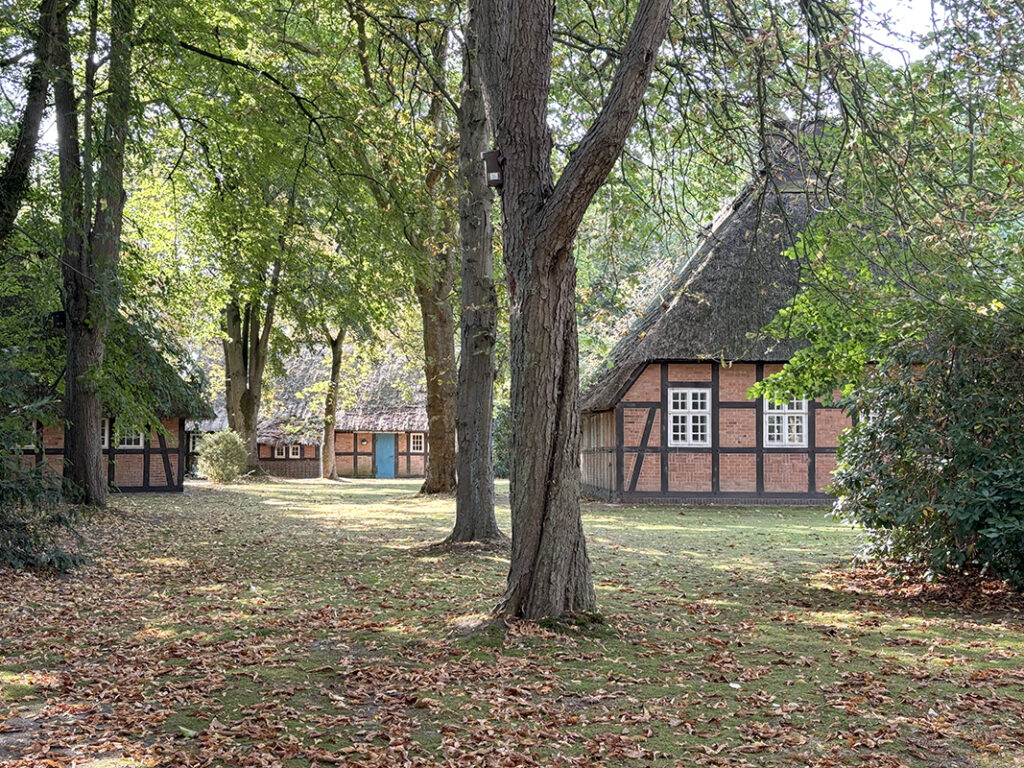
At the Oranjekazerne (Arnhem, NL) near my home lie two “fake villages,” built between 1940 and 1942 to house personnel of Fliegerhorst Deelen. Today I visited a “fake village” of a very different kind—though based on almost identical architectural and ideological principles.
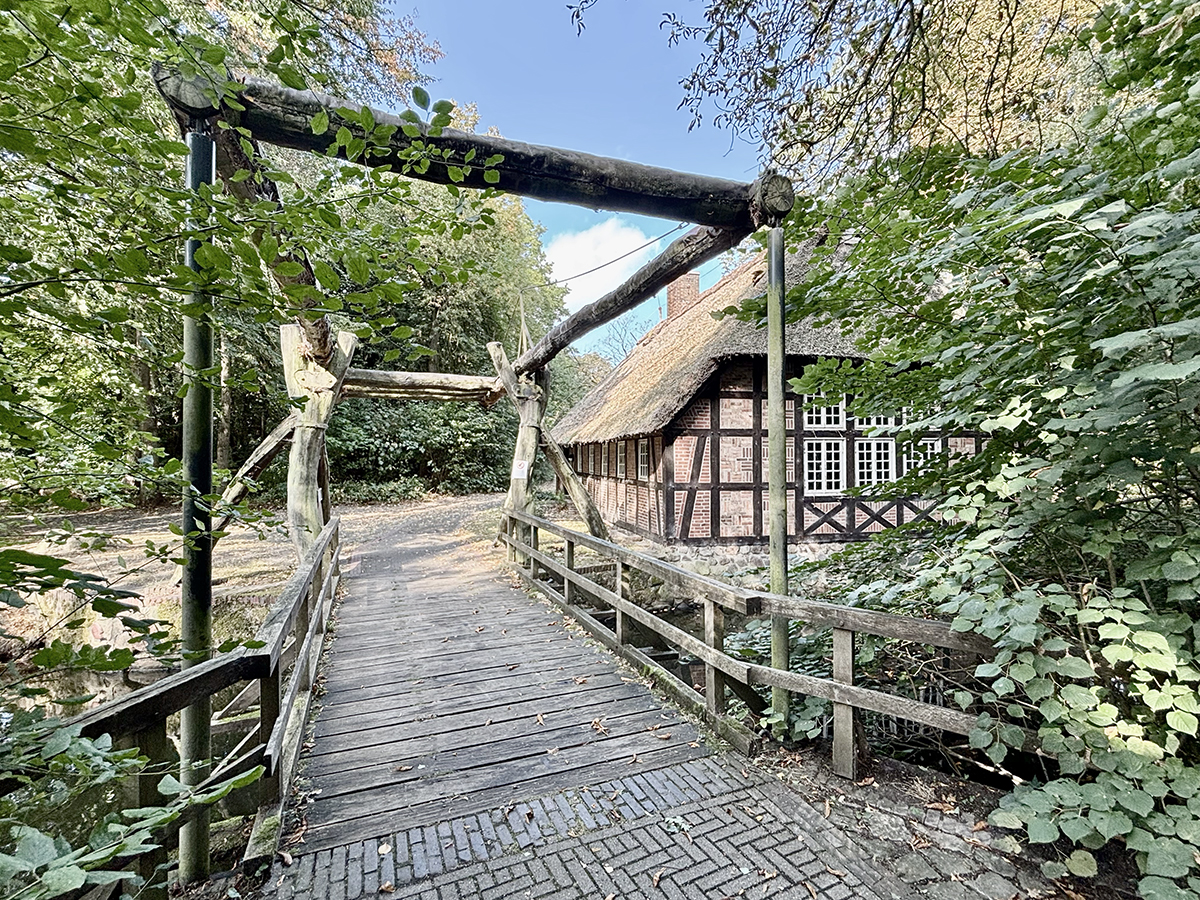
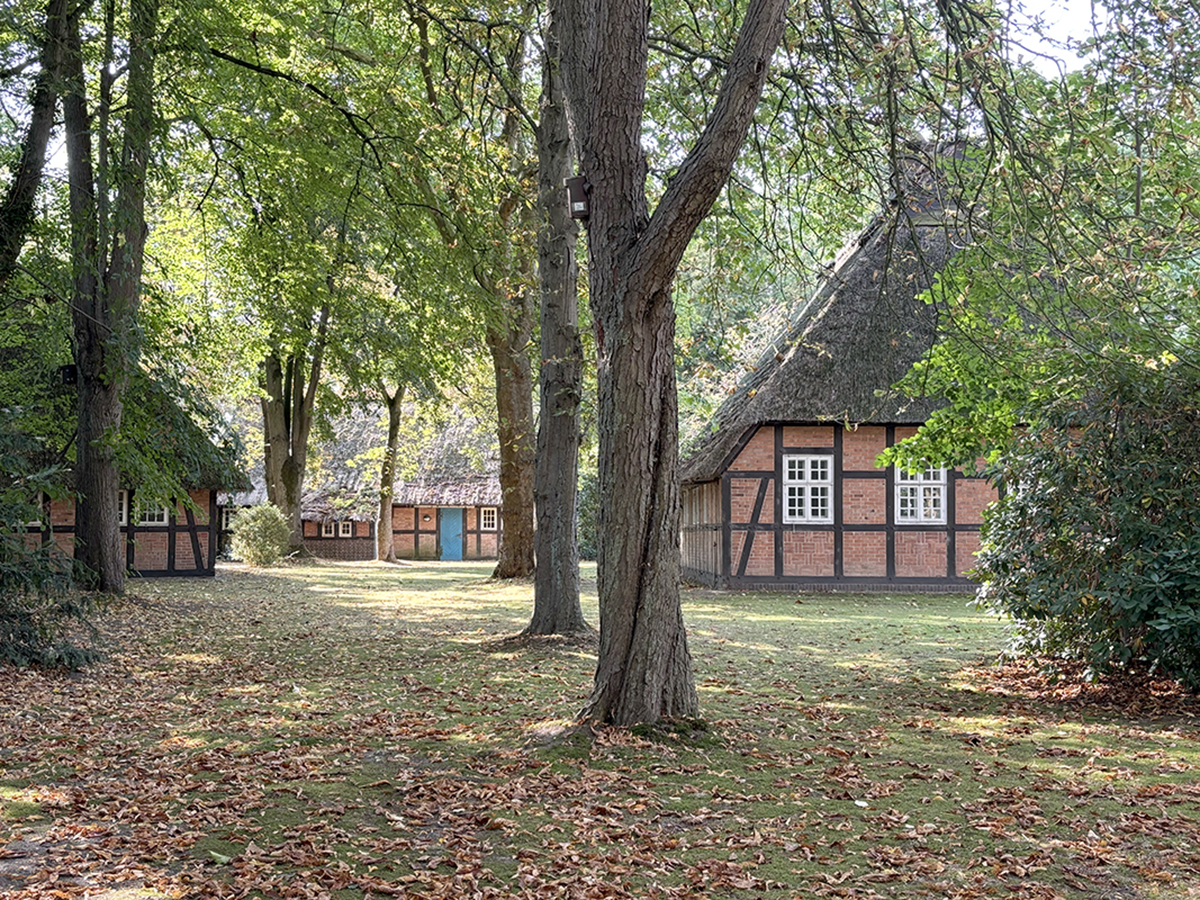
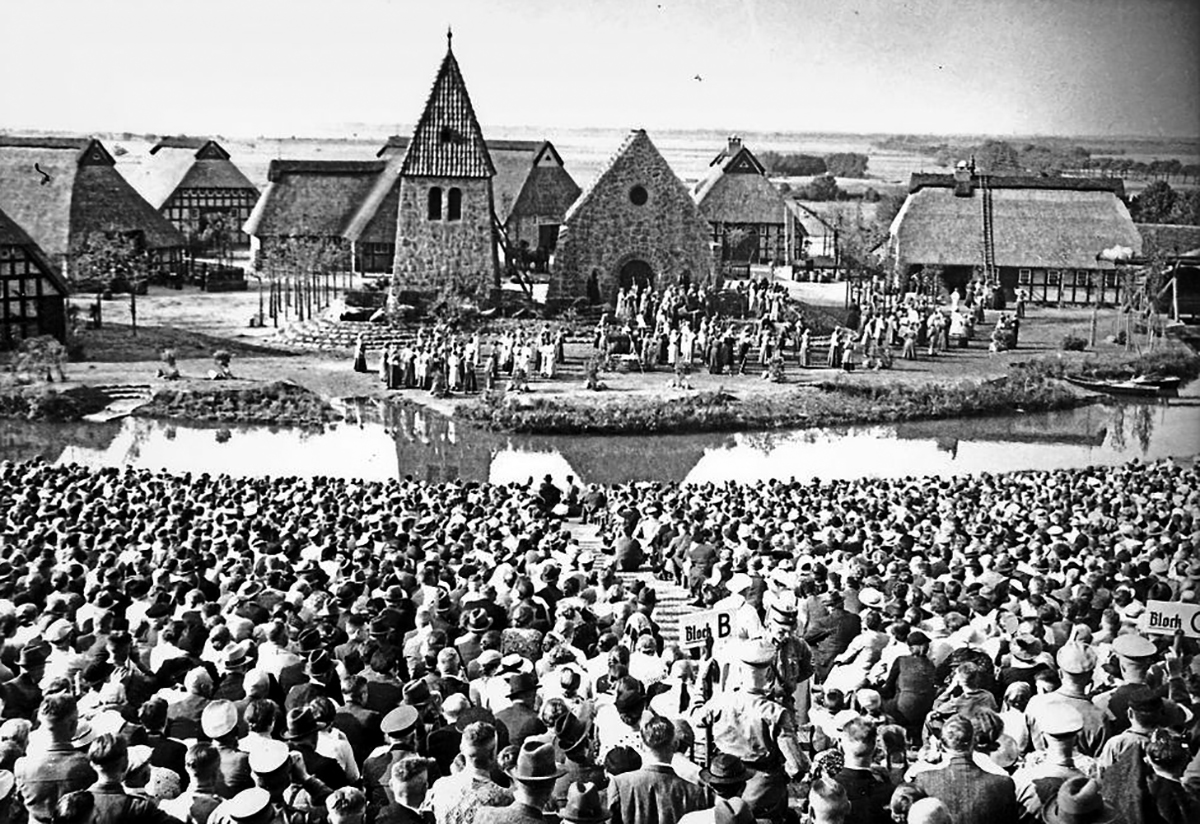
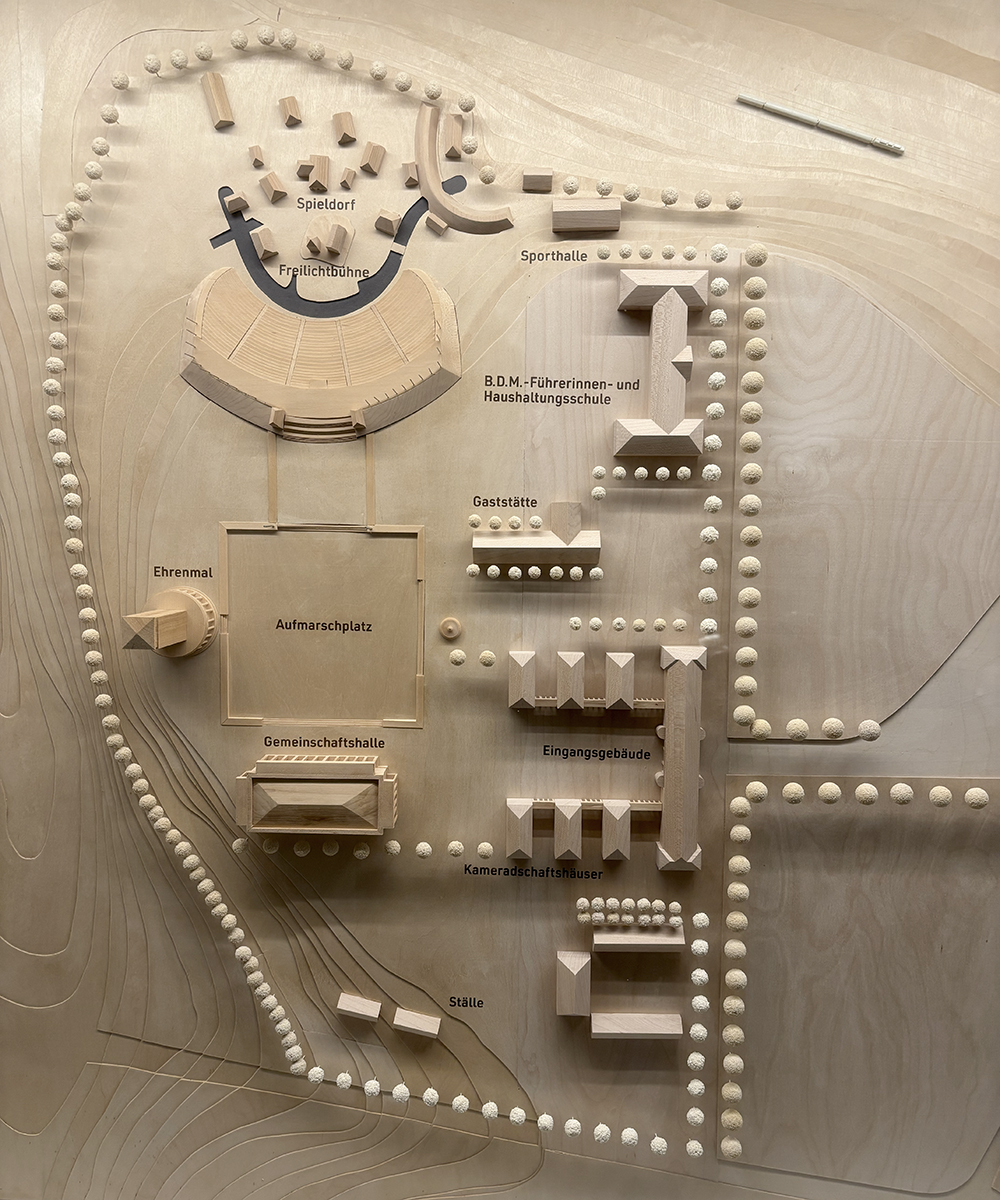
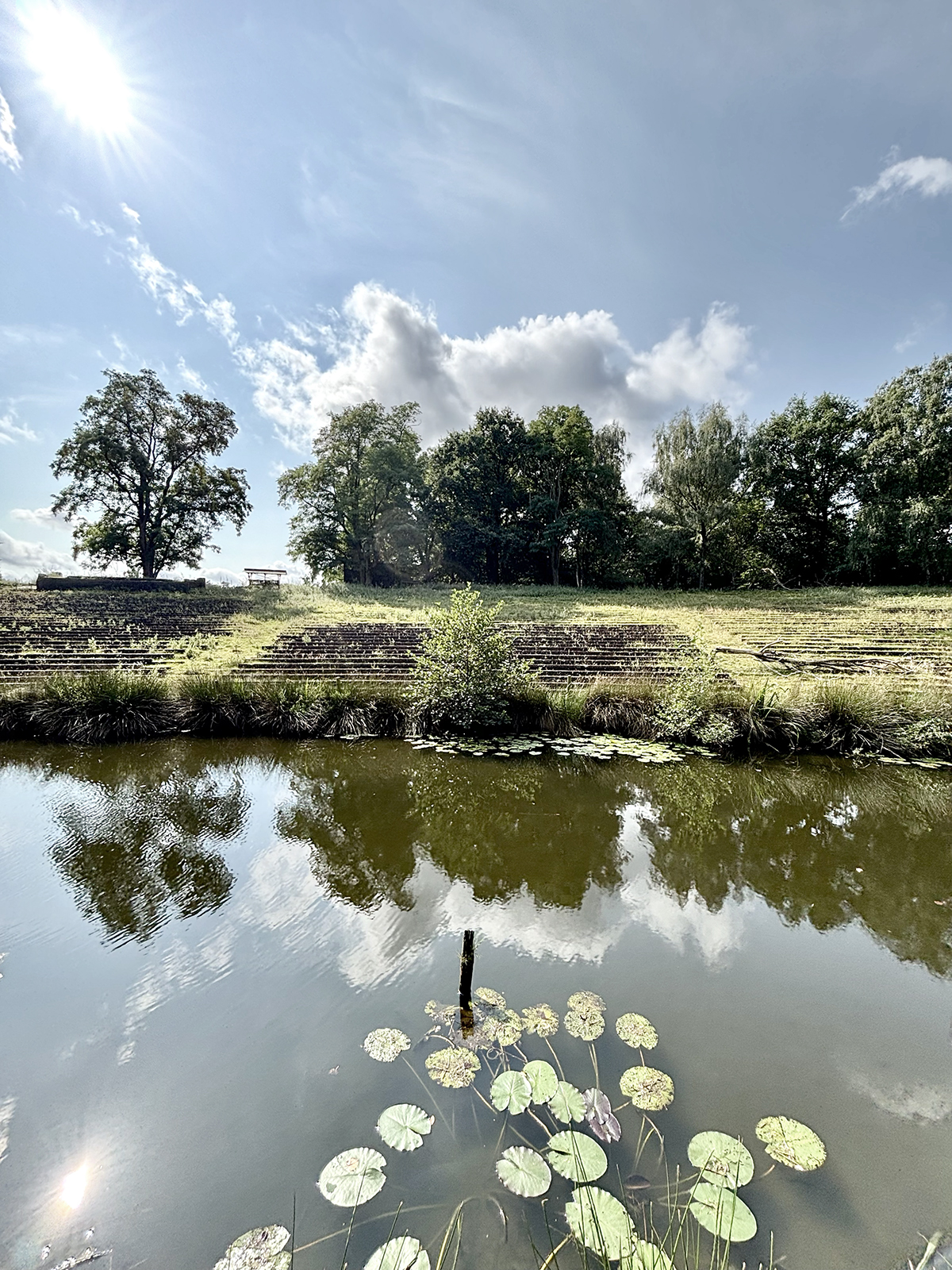
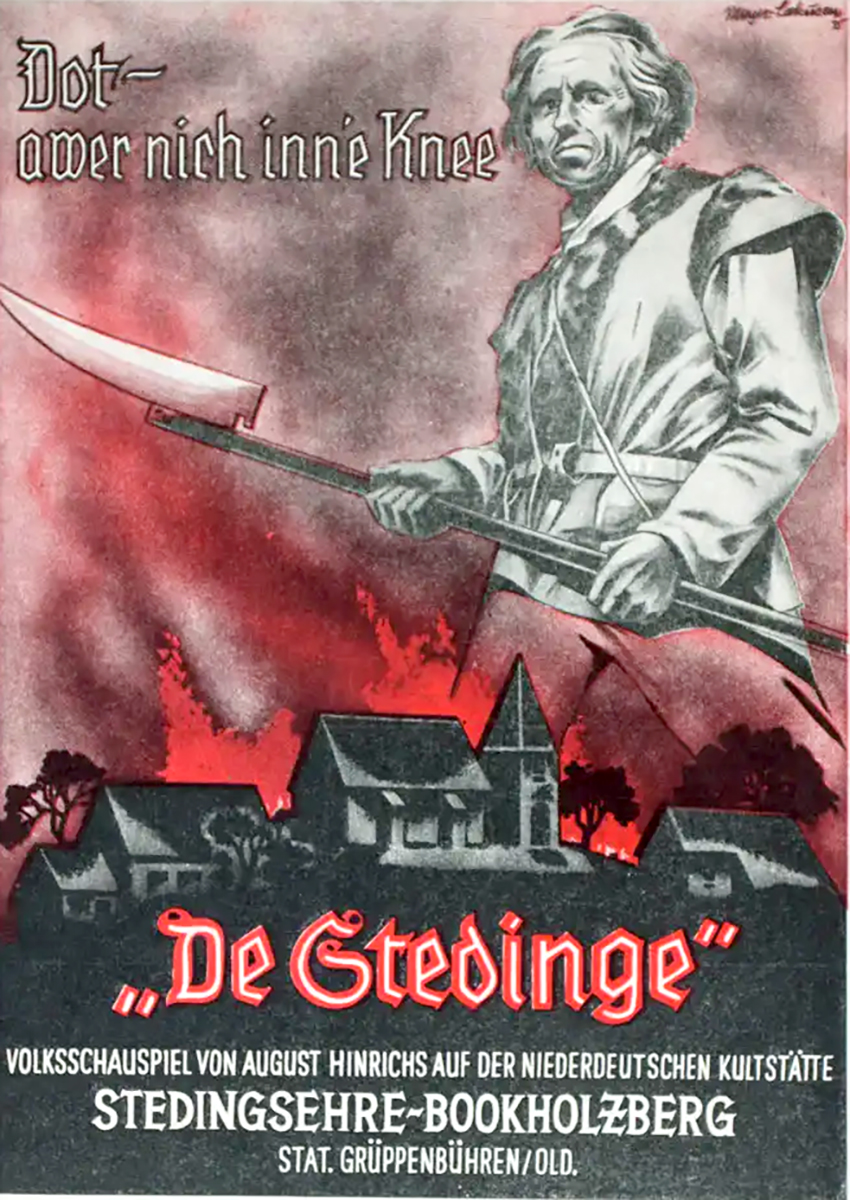
The open-air theatre Stedingsehre was built in 1934 on the initiative of Gauleiter Carl Röver to stage The Stedinge, a play by August Hinrich about a 13th-century peasant revolt against the Bishop of Bremen—a story that perfectly fit the Blut und Boden ideology. An amphitheatre for 10,000 spectators was constructed, overlooking the Wesermarsch landscape and a small stage village where the “festspiel,” complete with horses and boats, was performed by about 200 actors.
As at the Oranjekazerne, no expense was spared to create solid buildings inspired by local styles. Like the mass rallies at the Bückeberg, however, festivities ended in 1937 when all efforts shifted to war preparations. Plans to expand the site into a Gauschulungsburg (regional party training center) never materialized, but the stage buildings were repurposed for ideological training. In 1944, a stray bomb (from an air raid on the Focke-Wulf factories in Bremen) destroyed the mock village church. After WWII, the remaining buildings housed a training center for war invalids.