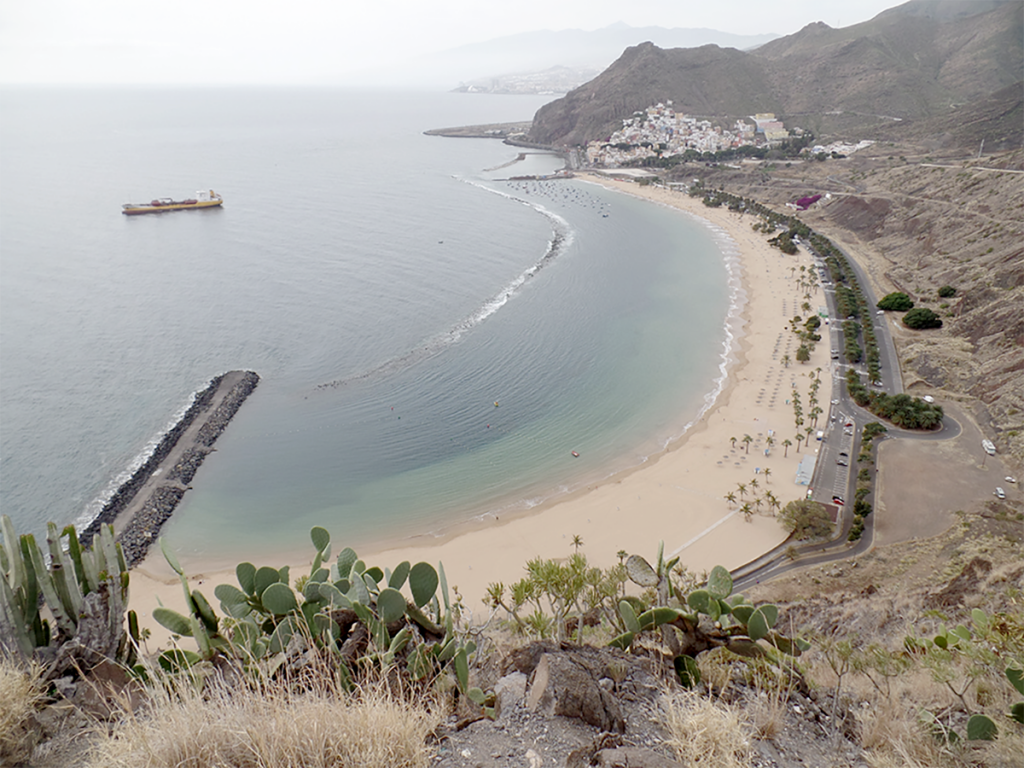
Playa de las Teresitas is the city beach of Santa Cruz de Tenerife. A ten-minute drive past oil refineries, quarries, and container terminals takes beachgoers along a four-lane road to a stretch of coast that seems to have come straight out of a holiday brochure: golden sand, palm trees, and gently rippling turquoise water. Beneath the palms are sun loungers, several kiosks sell exotic cocktails, and there are toilets, a lifeguard, and other amenities. A concrete wall separates the paradisiacal beach from the palm-lined parking lot.
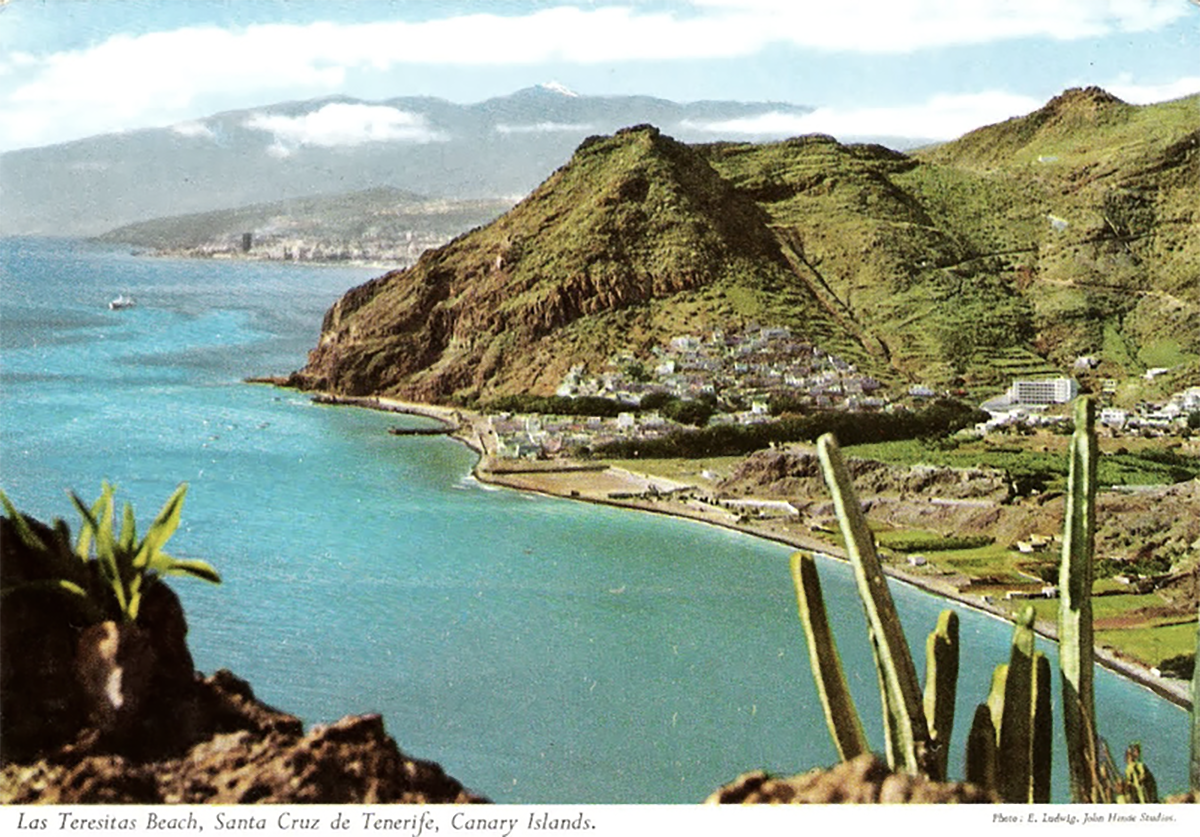
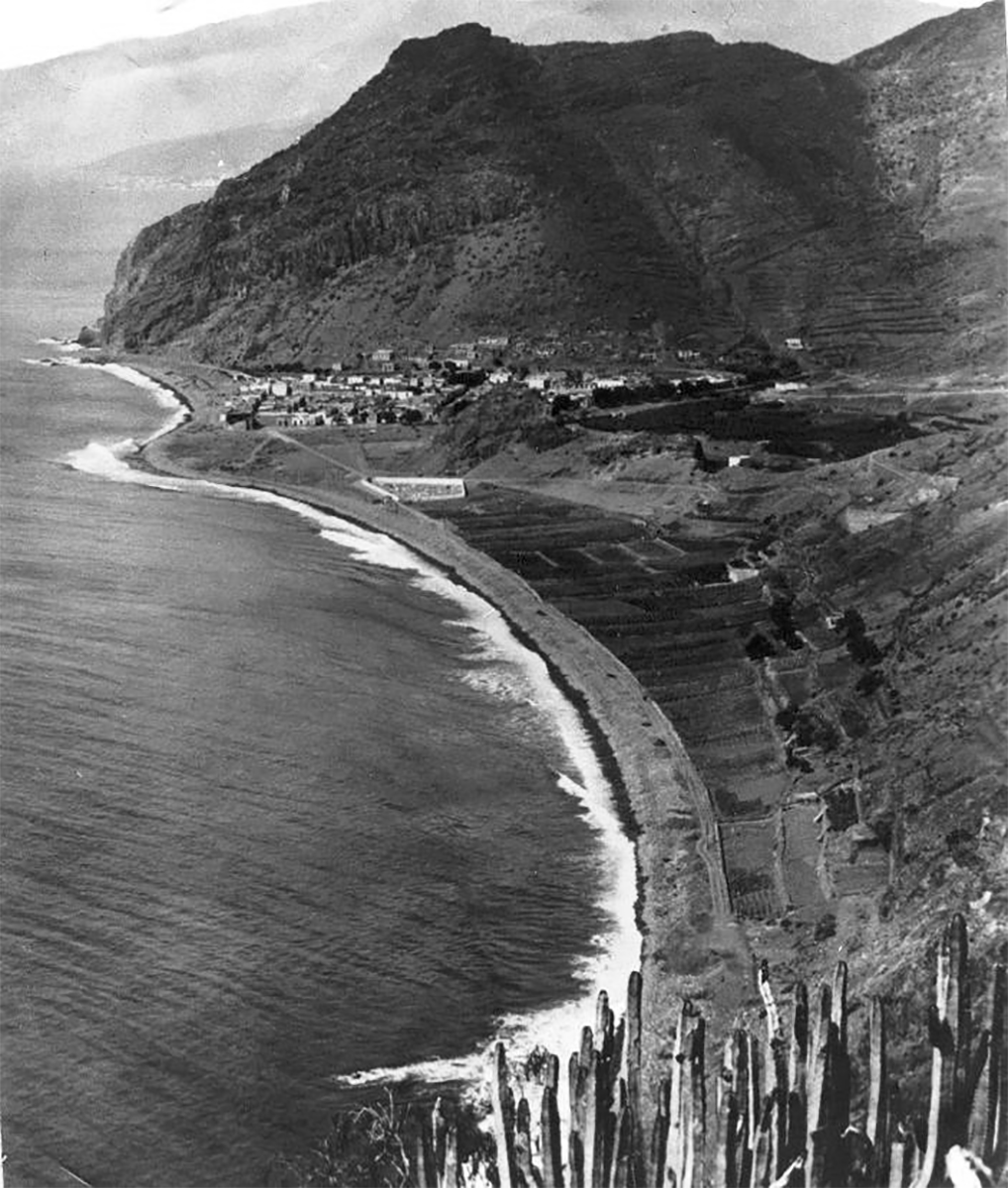
The presence of this fine yellow sand at Las Teresitas is remarkable, since northern Tenerife has only volcanic beaches with black sand and uncomfortable pebbles. Until 1973, Las Teresitas was such a beach as well: a narrow strip of black sand that disappeared under water at high tide, with several dozen meters of pebbles behind it. Between the pebbles and the cliffs lay a shallow strip of land with a few houses and orchards. It was also home to the holiday residence of the jet-setting Count and Countess of Württemberg.
In January 1957, General Enrique Torres learned to his astonishment from the newspaper that a hotel, villas, and a beach were to be built on the site of his coastal battery. Because the expansion of Santa Cruz’s harbor had swallowed up a number of popular beaches, the city council had decided to adopt an idea put forward by two engineers.
In 1968, a breakwater was built 200 meters offshore along the full length of the bay. Behind it, the bay was made shallower by dumping construction debris. Then, from what was then the Spanish colony of Spanish West Africa, 140,000 cubic meters of golden Saharan sand were shipped in, raising the level of the bay and the beach by a meter. Playa de las Teresitas opened in 1973, and since then Santa Cruz has had one of the most beautiful beaches on Tenerife.
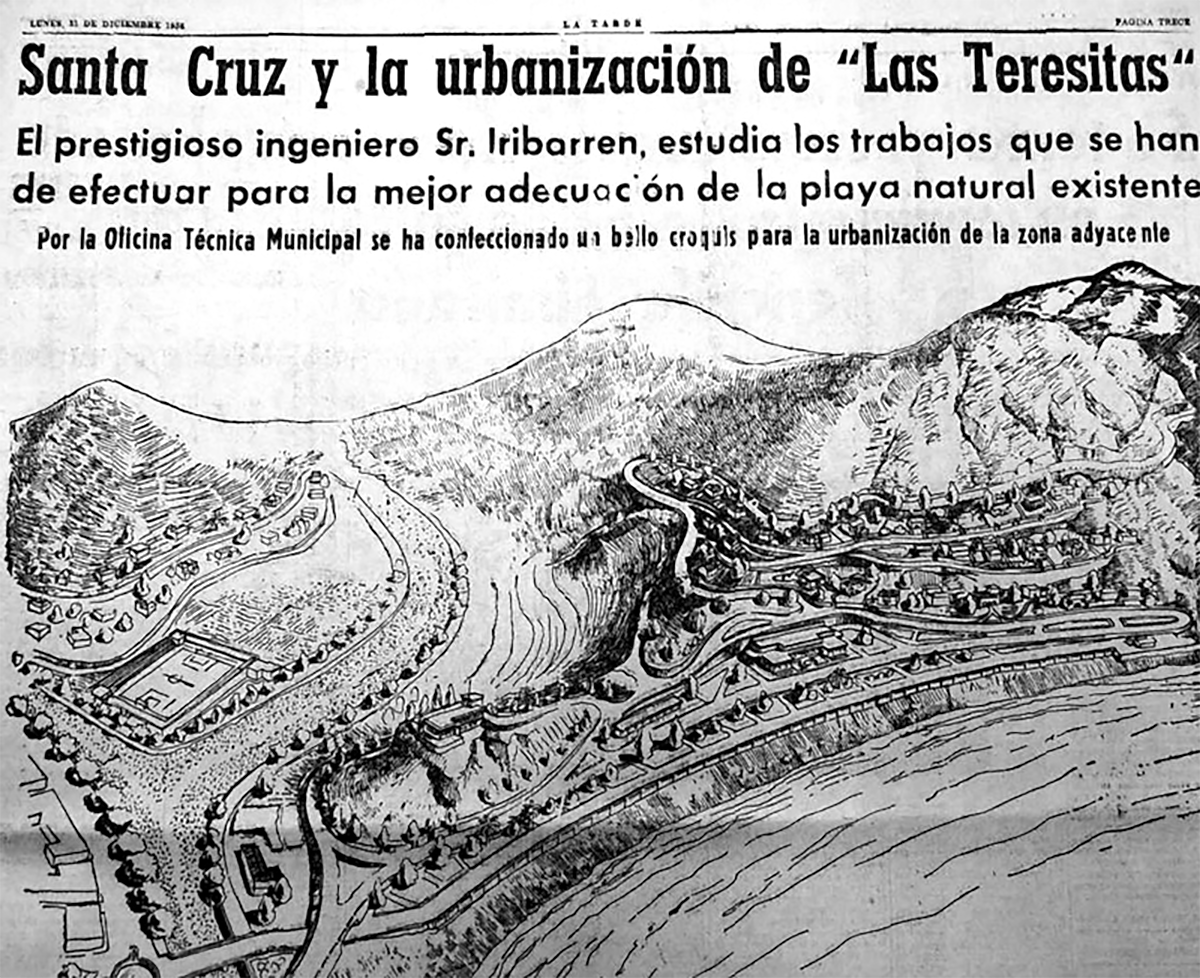
After the death of dictator Franco in 1976—before the outbreak of the Spanish Civil War he had been posted away as military governor of the Canary Islands—the winds began to shift on the Canary Islands as well. The plan to build the hotel and villas carried too much of the smell of the old regime, and the proposals disappeared into a deep drawer.
In 1998, businessman Manuel Martín bought Playa de las Teresitas. He developed an ambitious plan to turn the bay into a luxury resort. After an international competition, the design by Dominique Perrault—the architect of the National Library in Paris—was selected. Martín borrowed 33 million euros from Caja Canarias to finance the purchase. At the time, Miguel Zerolo, the mayor of Santa Cruz, sat on the bank’s board of directors.
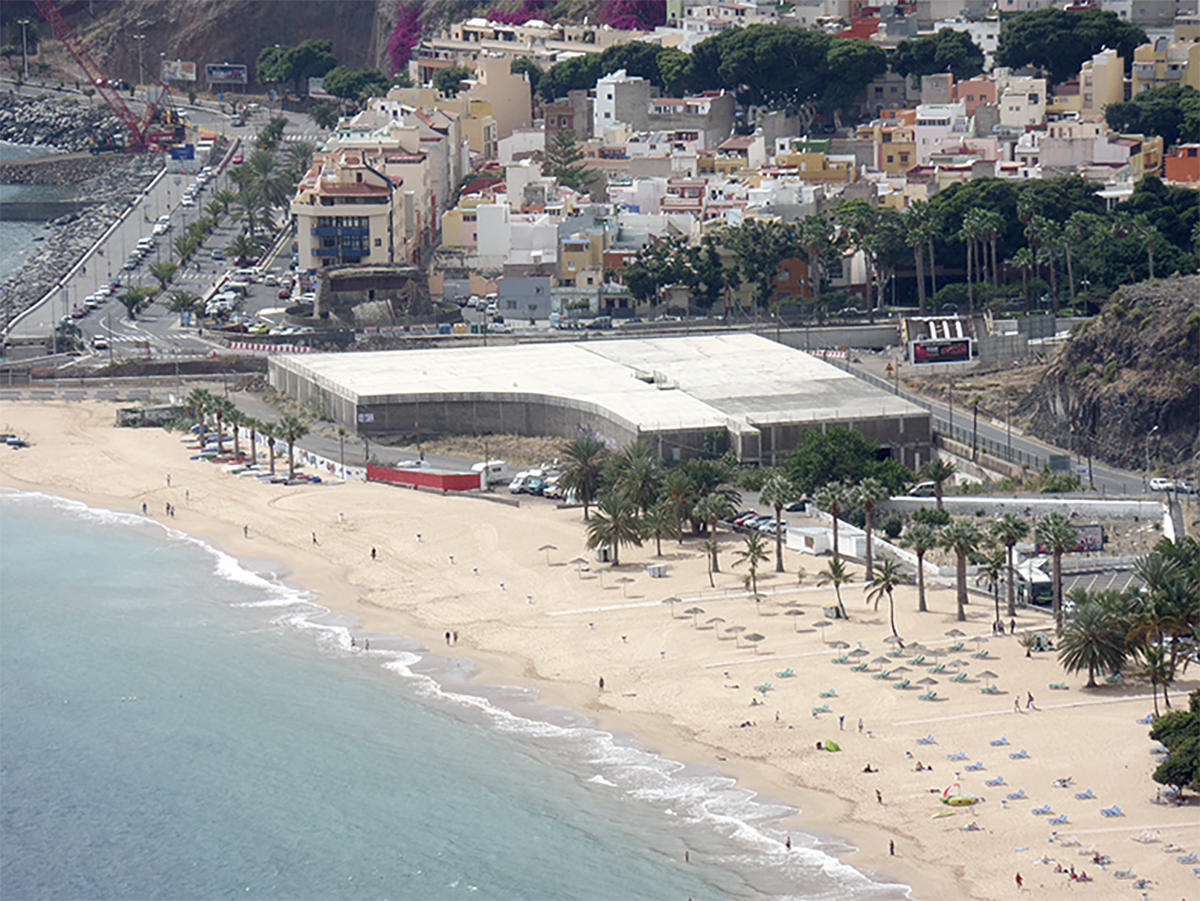
Armed with nothing more than a permit to build garden sheds, construction of Perrault’s luxurious apartment complex began in 2001. The building was to rise twelve stories high, stretch 180 meters in length, and stand atop an underground parking garage and a ground floor with retail space. That same year, Martín sold the beach back to the municipality for nearly 52 million euros, making a profit of 19 million euros on the transaction.
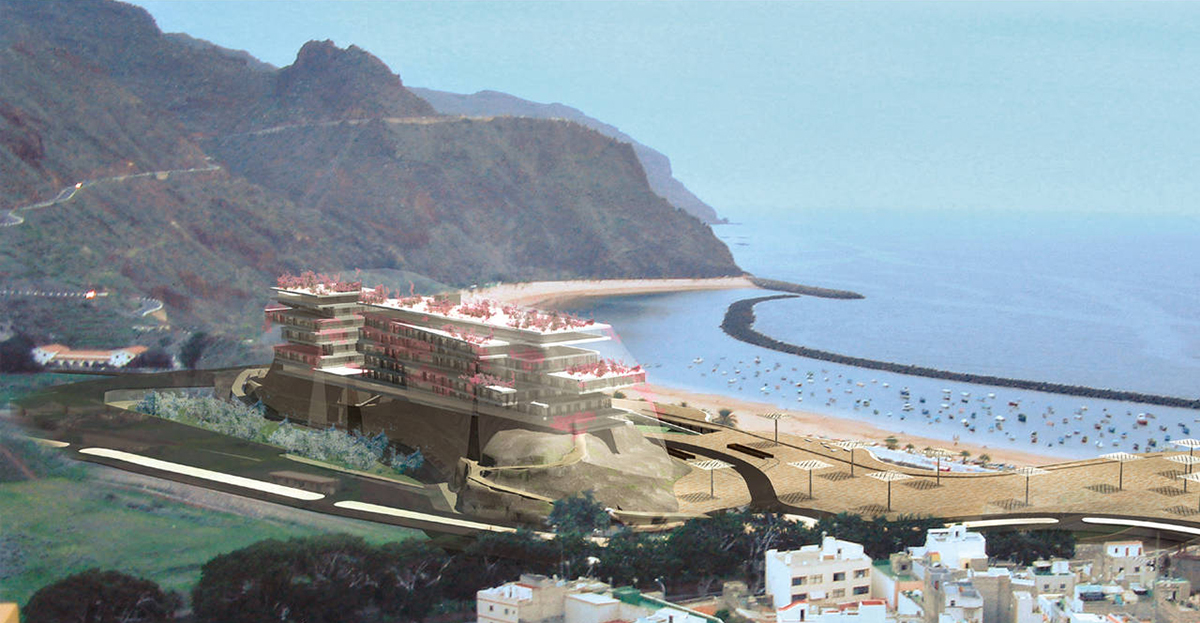
The “Las Teresitas Case” caused a national uproar in Spain, and the Ministry of Finance in Madrid ordered an in-depth investigation. Mayor Zerolo—charged with corruption—would later resign. Construction of Perrault’s apartment complex was halted after the parking garage had been completed, and in 2007 the plan was abandoned.
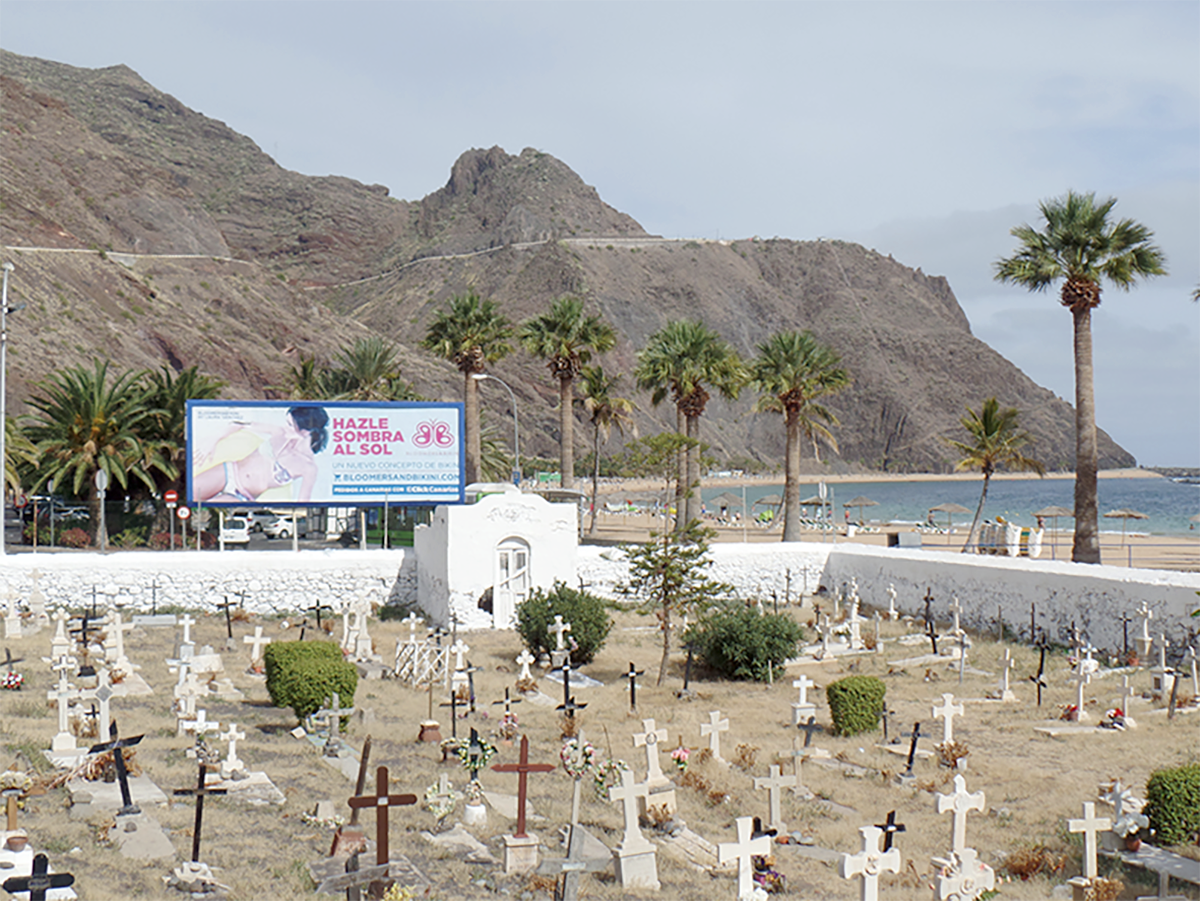
The now sealed-off parking garage—known locally as The Tomb—still stands forlornly between the beach and the small cemetery. Its demolition remains a matter of debate, because no one wants to bear the cost. On the small cemetery, hemmed in between the artificial beach with its African sand and The Tomb, the dead lying in eternal rest are the silent witnesses to all the changes that have taken place—or were meant to take place. Just like the two Indian laurel trees from the Württembergs’ garden, which silently flank the parking lot.